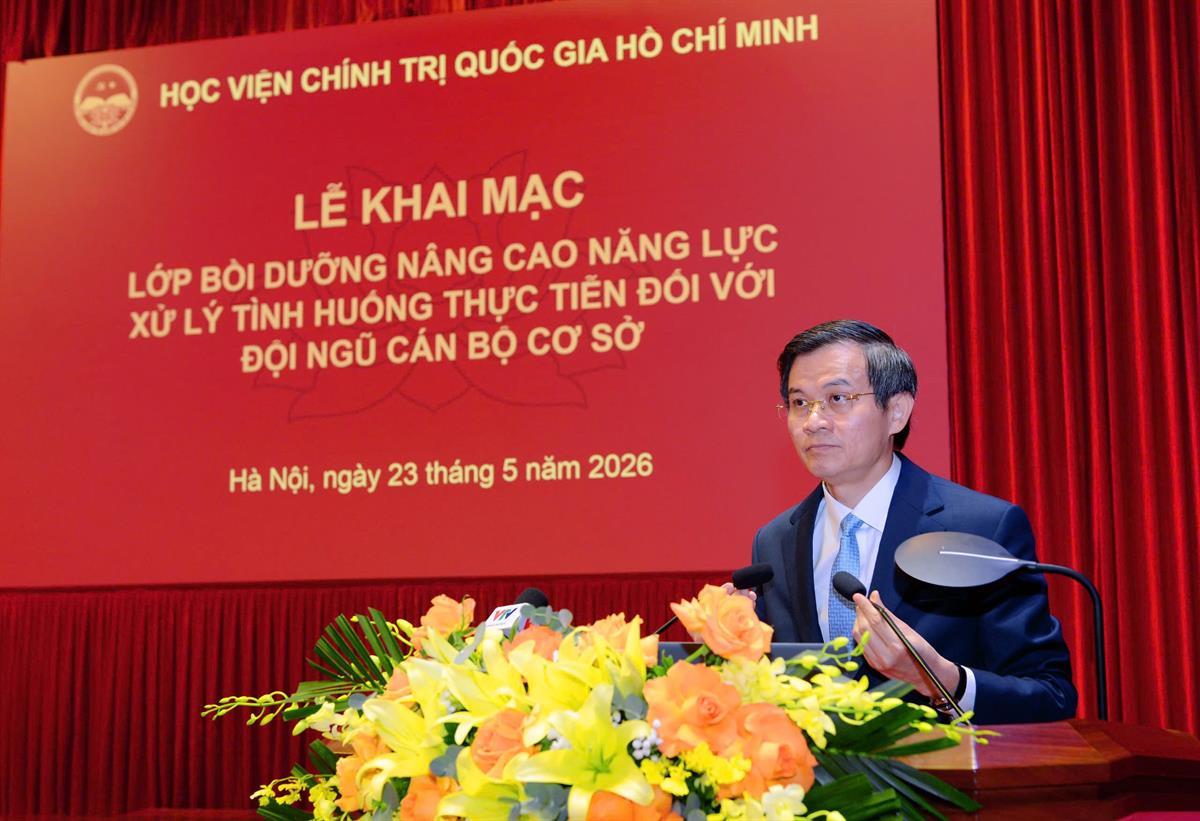
 Assoc. Prof. Dr. Doan Minh Huan, Member of the Politburo and Director of the Academy, delivered the opening remarks
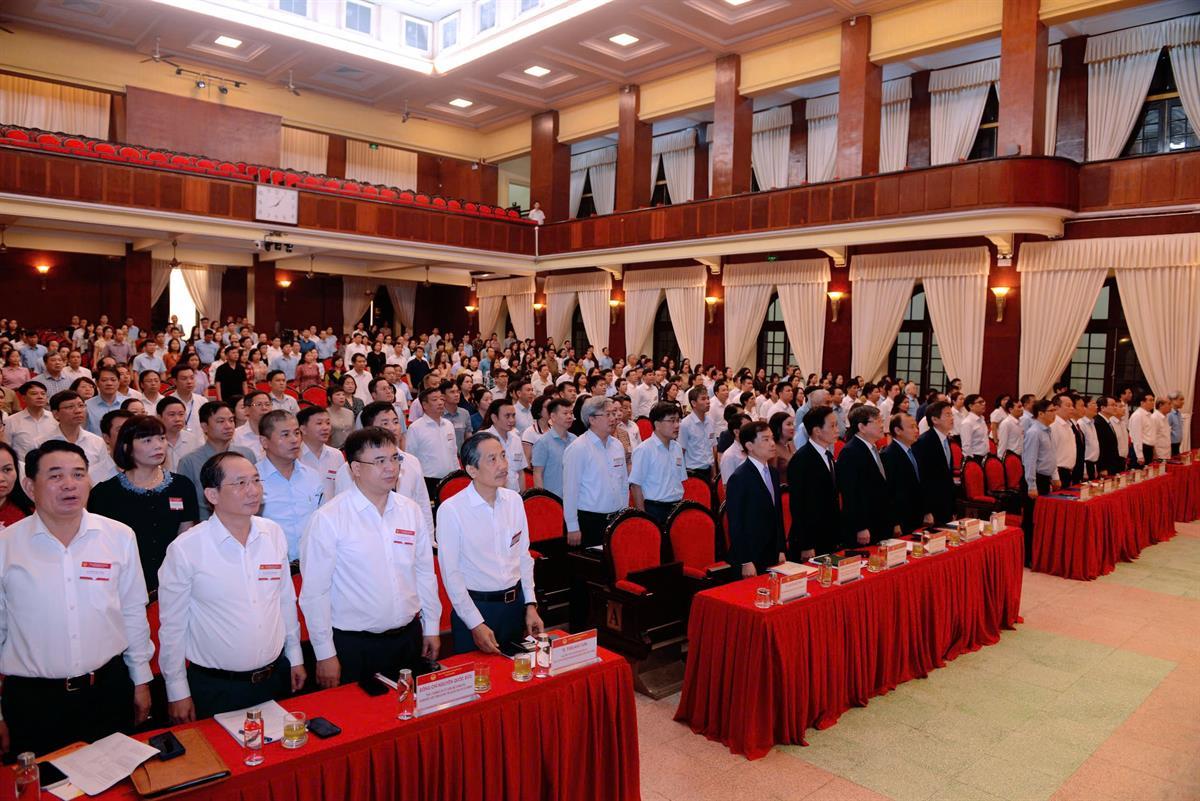 Delegates and participants at the flag salute ceremony
The training course was organized to implement the conclusions of General Secretary and President To Lam regarding solutions to improve the quality of grassroots-level cadres. It also concretizes Decision No. 700/QD-TTg dated April 20, 2026, issued by the Prime Minister approving the Project on Strengthening Training for Commune-, Ward-, and Special-Zone-Level Cadres and Civil Servants to Meet the Requirements of Operating the Two-Tier Local Government Model in the 2026–2031 Period, as well as Plan No. 559-KH/HVCTQG dated April 29, 2026, of the HCMA on training and capacity building for grassroots-level cadres and civil servants in the 2026–2031 period.
Through this program, the training course aims to enhance the leadership and management capacity, professionalism, development-oriented mindset, and public service awareness of commune-level cadres and civil servants. The program is closely linked to local governance practices and is designed to meet the requirements of tasks in the new development stage.
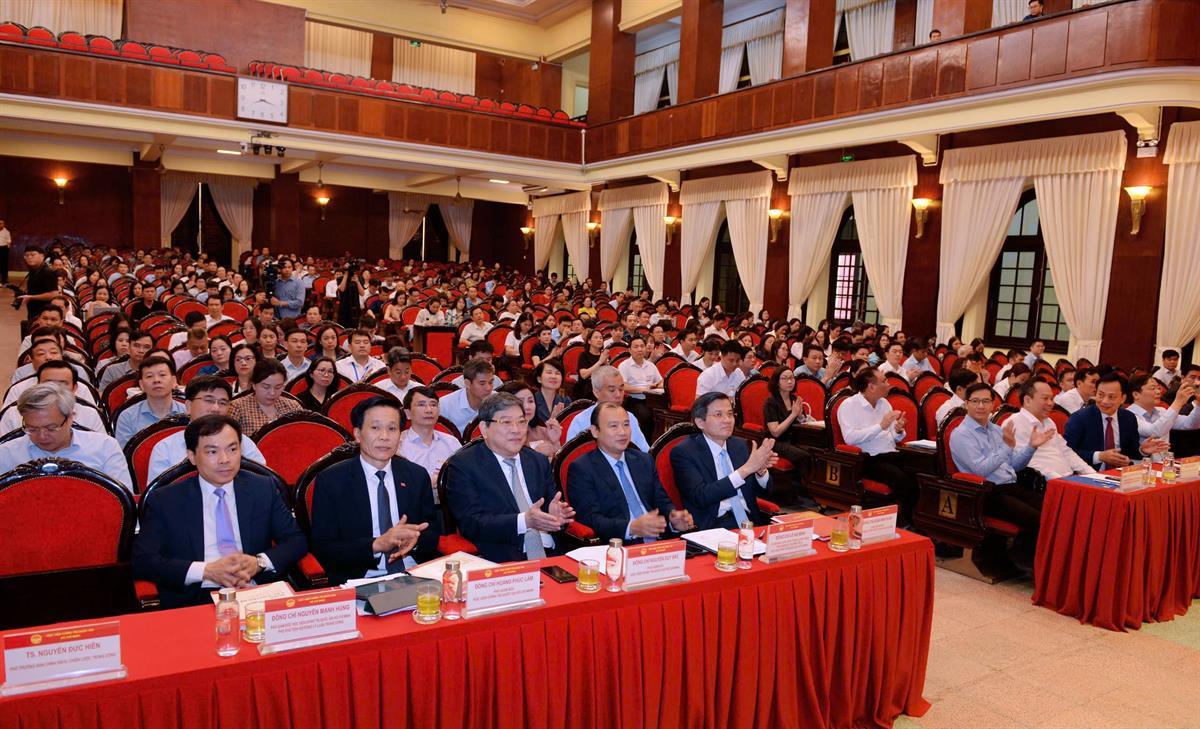 Delegates at the opening ceremony
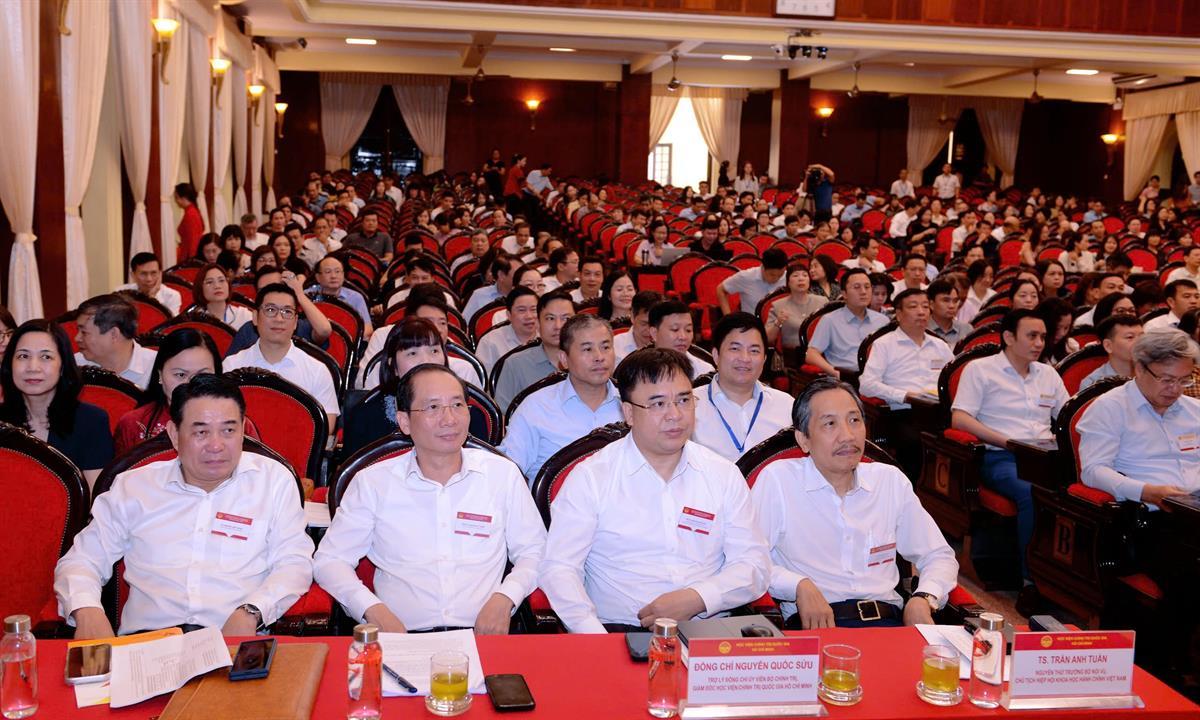 Delegates at the opening ceremony
In his opening remarks, Assoc. Prof. Dr. Doan Minh Huan emphasized that the course is being organized at a time when the country is urgently reviewing one year of operating the two-tier local government model, while practical realities are placing increasingly higher demands on grassroots-level cadres.
According to Assoc. Prof. Dr. Doan Minh Huan, the core objective of the training course is not merely to supplement knowledge but to transform thinking and enhance governance and implementation capacity among grassroots officials. Therefore, the program has been designed with a practical orientation, using real-world requirements as the basis for curriculum development. It seeks to help participants move beyond simply “knowing how to handle tasks” toward the ability to solve complex, interdisciplinary problems based on data and innovative thinking. In doing so, the course contributes to clarifying the mission and responsibilities of grassroots authorities in comprehensive governance, development facilitation, and public service.
Highlighting the innovative aspects of both the content and training methodology, Assoc. Prof. Dr. Doan Minh Huan noted that the curriculum focuses on key competency areas such as governance and administration, overcoming institutional bottlenecks, and applying digital technology and artificial intelligence (AI) in commune-level governance. In terms of methodology, the course moves away from one-way knowledge transmission toward a model of “co-creating knowledge,” encouraging active participation and two-way interaction among learners, lecturers, and experts. Practical situations serve as the central learning framework, while problem-solving capacity is used as the primary measure of effectiveness. The guiding principle throughout the program is: “learning from practice, solving practical problems, and returning to serve practice.”
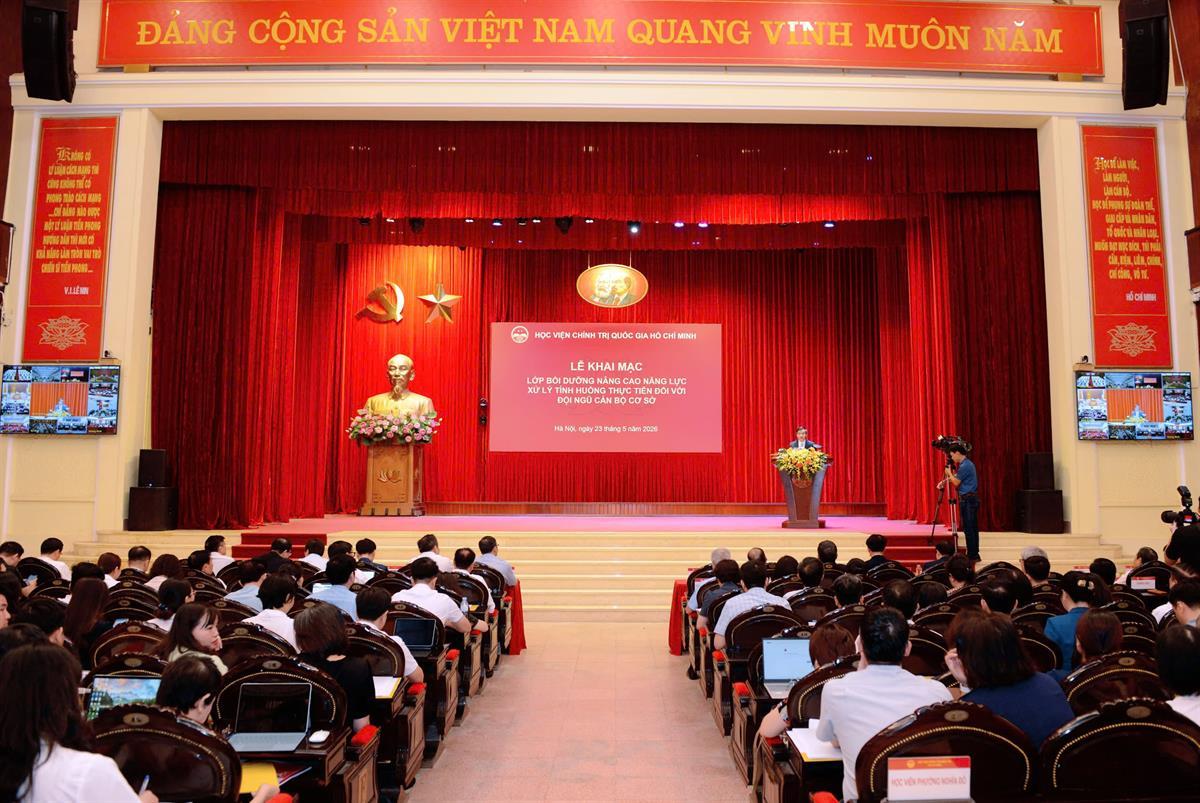 Overview of the opening ceremony
According to the Member of the Politburo and Director of the Academy, the training course marks the beginning of a process of substantive and effective reform in cadre training and development, tailored to specific positions, job requirements, and local characteristics. On this basis, the HCMA will continue to design and issue training programs that are closely aligned with practical needs, with the goal of fostering self-learning capacity, continuous self-improvement, and adaptability among cadres in response to rapidly changing realities.
He expressed confidence that, with careful preparation and a strong sense of responsibility among lecturers, participants, and relevant units, the training course would successfully achieve its objectives and contribute to a breakthrough in improving the quality of grassroots-level cadres, thereby meeting the requirements of national development in the new era.
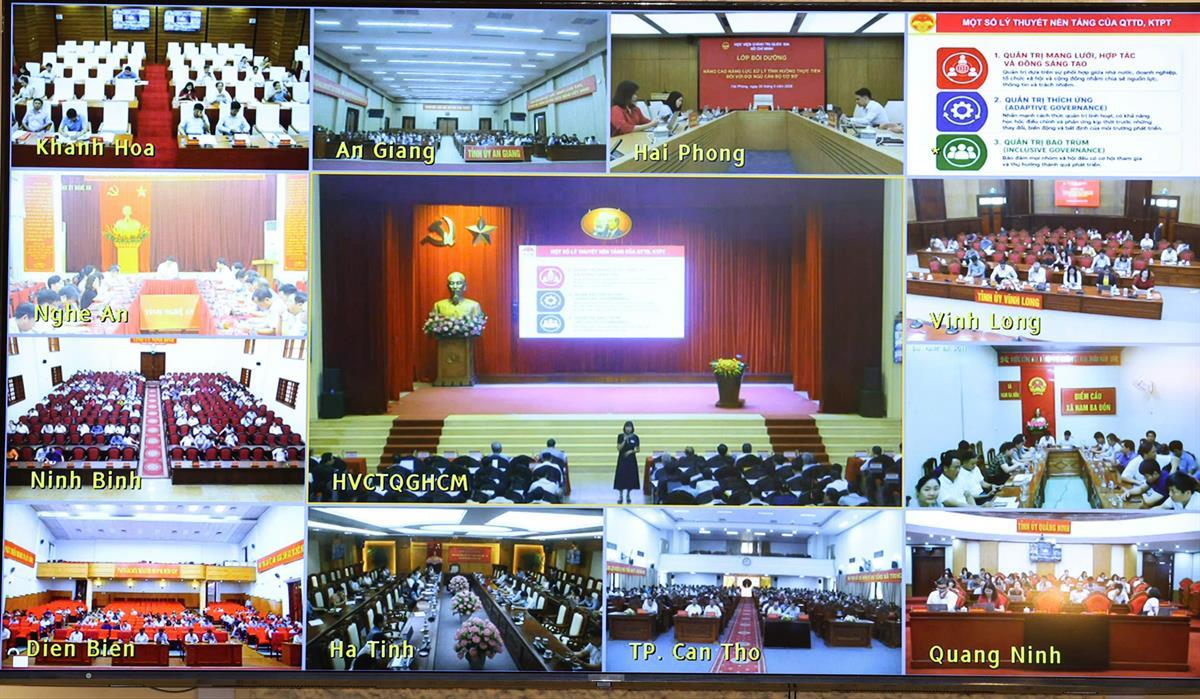 The training course was connected online to commune-, ward-, and special-zone-level locations nationwide
Immediately following the opening ceremony, participants attended Topic 1, entitled “Comprehensive Governance and Development Facilitation at the Commune Level under the Two-Tier Local Government Model,” presented by Assoc. Prof. Dr. Nguyen Thi Hong Hai, Head of the Faculty of Administrative Studies at the National Academy of Public Administration and Governance, together with a team of lecturers.
This was followed by a roundtable discussion on “Comprehensive Governance and Development Facilitation at the Local Level through Practical Situations,” featuring Prof. Dr. Nguyen Quoc Suu, Assistant to Assoc. Prof. Dr. Doan Minh Huan, along with other experts.
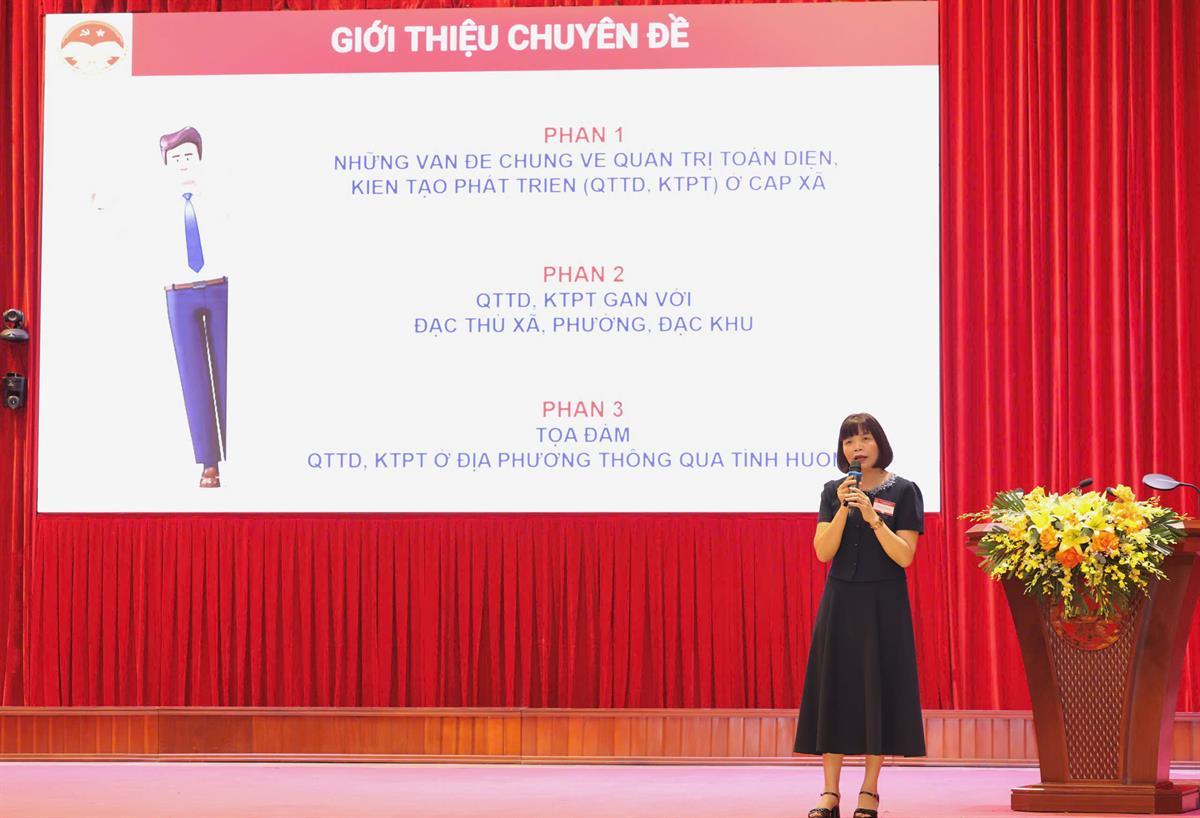 Lecturers presented Topic 1
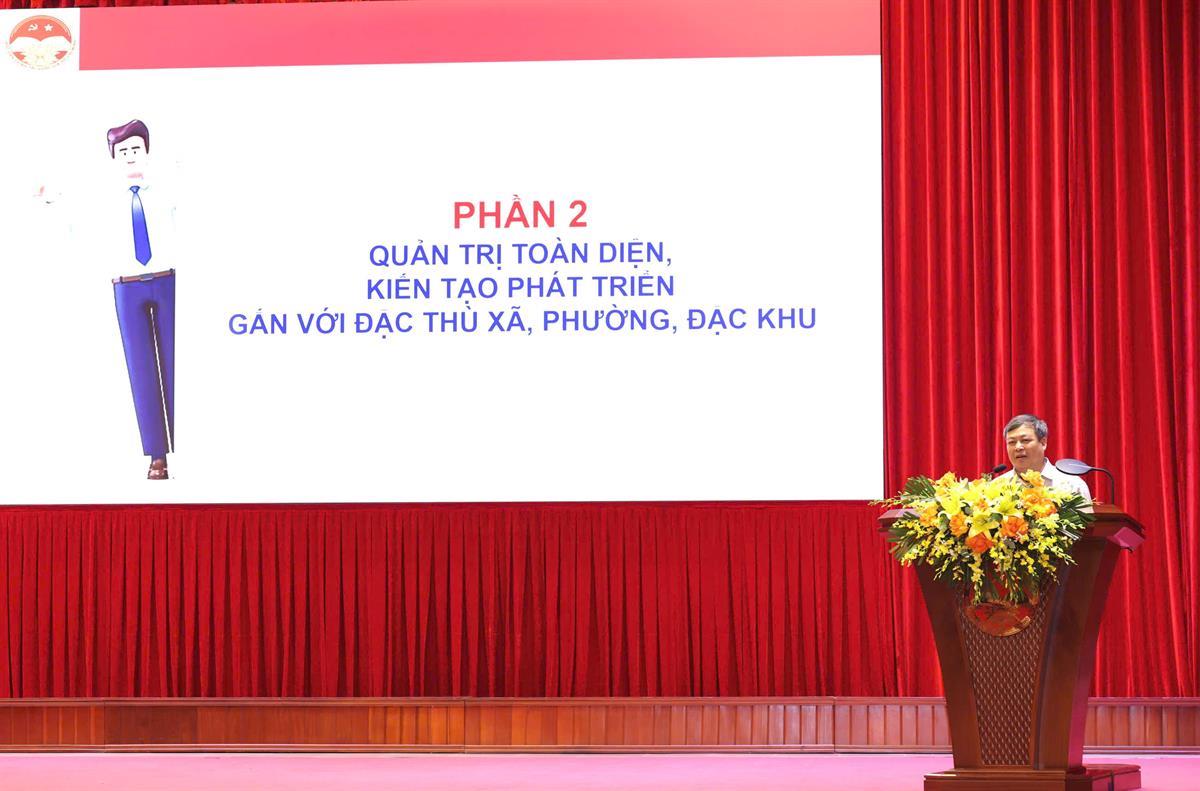 Lecturers presented Topic 1
The topic was designed to provide participants with foundational knowledge regarding comprehensive governance and development facilitation at the commune level within the framework of the two-tier local government model. It aimed to help learners understand the transition from administrative management to development-oriented governance, recognize the distinctive characteristics of communes, wards, and special zones, and appreciate the role of commune-level leaders and managers in local governance.
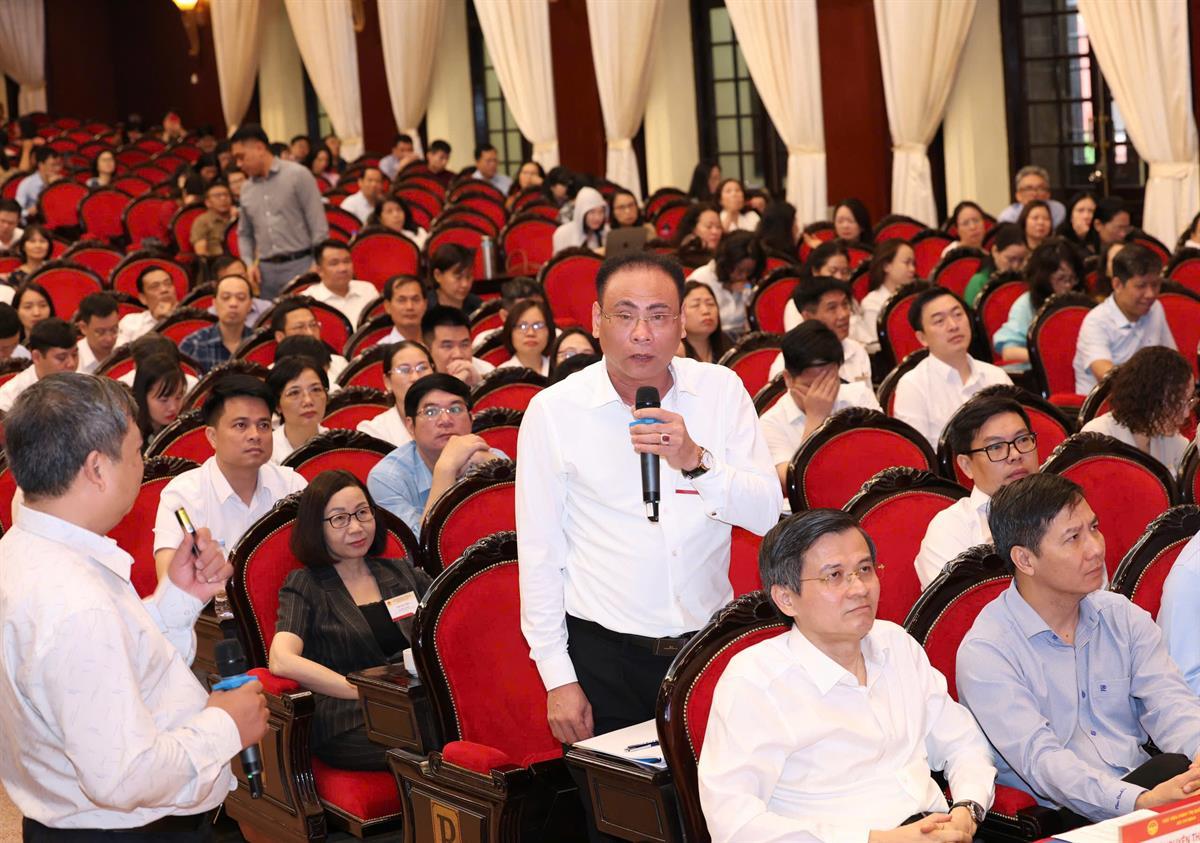 Lecturers and participants discussed the topic
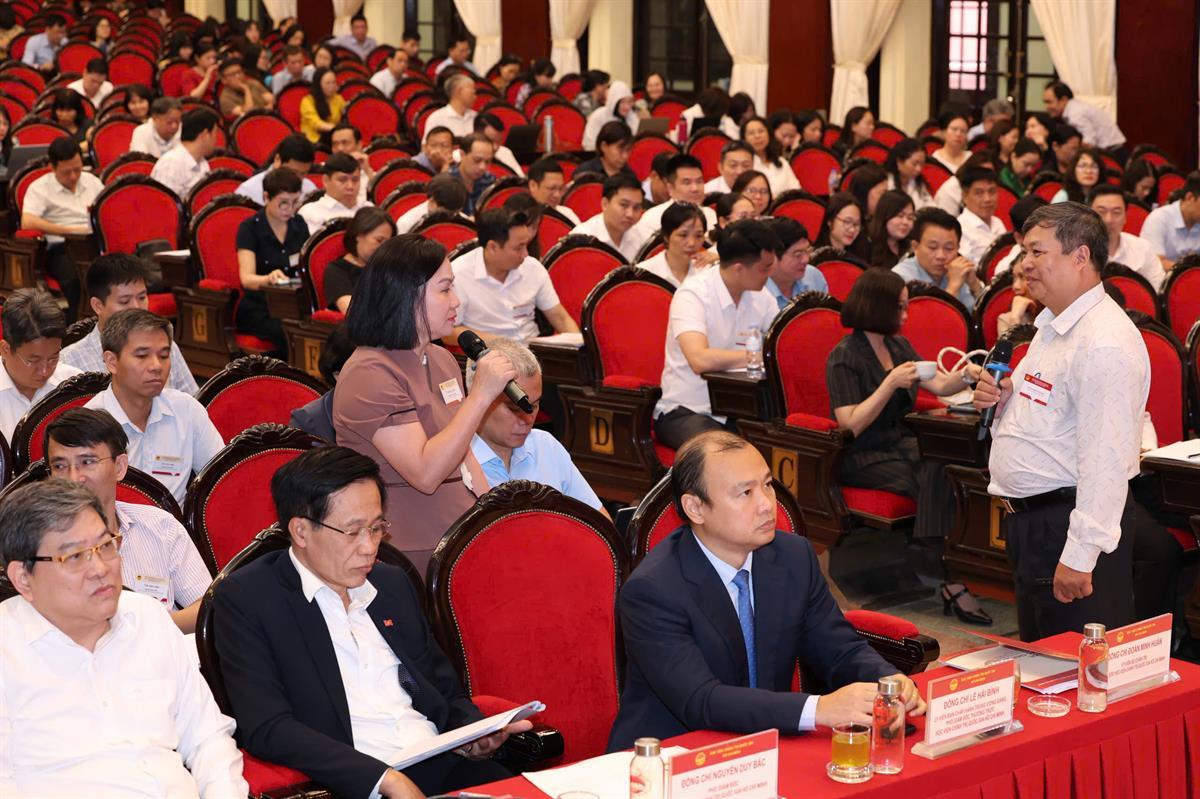 Lecturers and participants discussed the topic
In addition to discussions on theoretical and practical issues related to comprehensive governance and development facilitation at the commune level, the morning roundtable session featured lively exchanges on issues directly associated with local governance requirements in the new context. Participants shared experiences, discussed challenges, and received guidance on specific practical situations and difficulties encountered in carrying out grassroots-level responsibilities. These discussions helped strengthen participants’ problem-solving skills and their ability to apply knowledge effectively in leadership and management activities.
The roundtable emphasized several key concepts central to modern governance, including comprehensive development facilitation, strategic thinking, consensus-building, data-driven decision-making, and sustainability. The effective application of these values in leadership and administration is expected to contribute to improved local governance quality, create momentum for sustainable development, and meet the broader development requirements of the country.
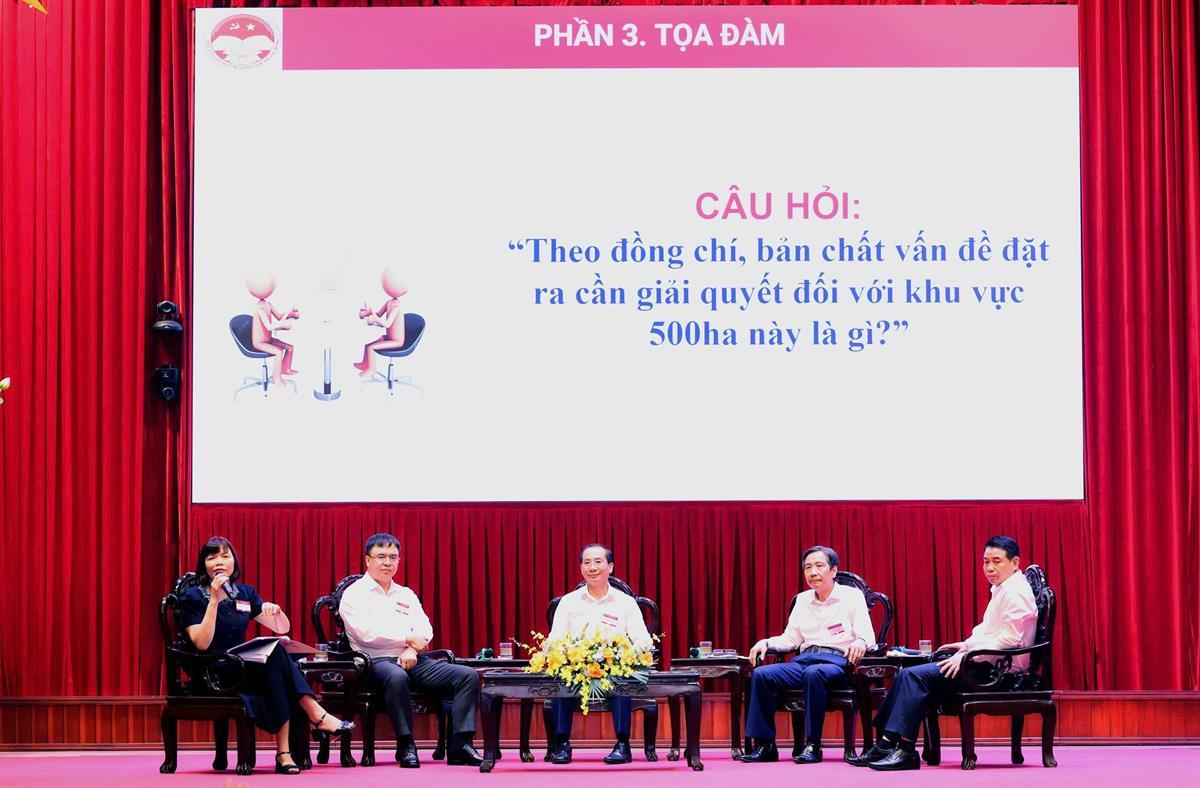 Experts participated in the roundtable discussion