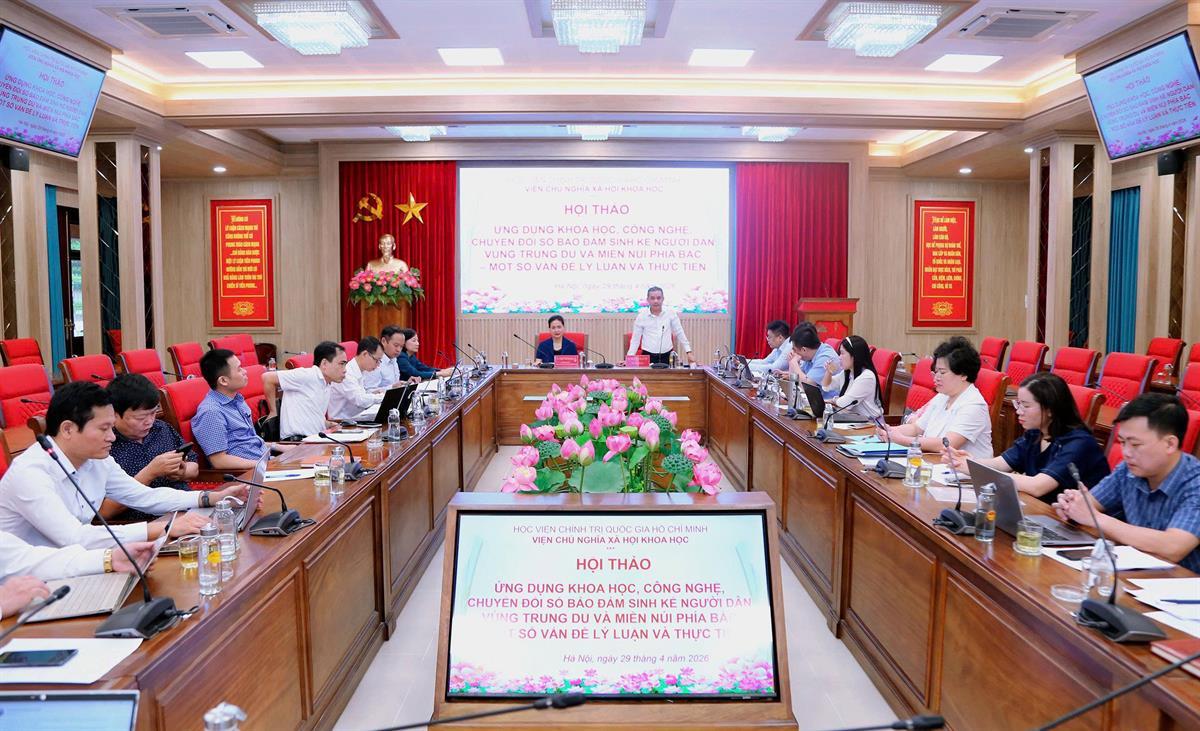
 Overview of the conference
Delivering the opening remarks, Dr. Pham Thi Hoang Ha emphasized that the northern midlands and mountainous region holds a particularly important position in terms of economic, political, social, national defense, and security development. The region is also endowed with rich natural resources, biodiversity, and diverse ethnic cultural identities. As a strategic area, it plays a vital role in promoting sustainable development, maintaining social stability, strengthening the all-people national defense posture, and preserving the country’s distinctive cultural heritage.
However, despite its considerable potential and advantages, the region continues to face numerous challenges. Poverty rates remain high in many localities, while local livelihoods are often vulnerable to natural disasters, climate change, and market fluctuations. Against the backdrop of the Fourth Industrial Revolution and the rapid advancement of digital transformation, the region is presented with both new development opportunities and increasingly demanding requirements.
According to Dr. Pham Thi Hoang Ha, the application of science, technology, and digital transformation not only enhances production and business efficiency but also creates new and more diversified livelihood models capable of adapting to changes in both natural and economic environments. These developments provide a foundation for restructuring livelihoods toward higher value-added activities, reducing dependence on natural resource exploitation, and strengthening resilience to external shocks, thereby helping narrow development gaps among regions.
From this perspective, she stressed that researching and proposing technological solutions to improve labor productivity, increase incomes, stabilize living conditions, and ensure sustainable livelihoods for local people is an urgent task of both immediate and long-term strategic significance.
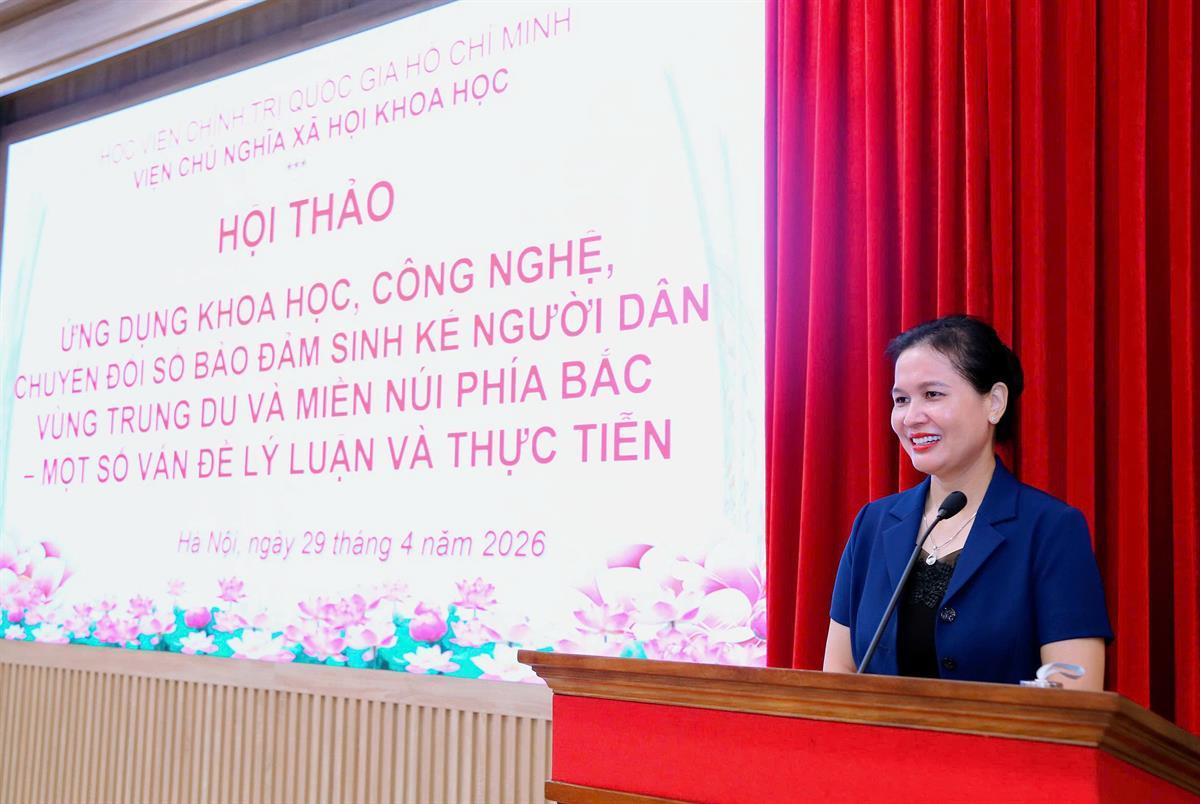 Dr. Pham Thi Hoang Ha, Director of the Institute of Scientific Socialism delivered opening remarks
The conference was organized into two in-depth discussion sessions designed to integrate theoretical perspectives with practical experiences. The first session focused on theoretical issues relating to the actors, content, and approaches involved in applying science, technology, and digital transformation to sustainable livelihood development. The second session examined specific sectors and practical experiences from localities across the northern midlands and mountainous region, highlighting successful models, lessons learned, and challenges encountered during implementation.
Through the presentations and extensive discussions, participants reaffirmed the increasingly important role of science, technology, and digital transformation in promoting socio-economic development in the region. Many speakers noted that digital technologies not only support product promotion and local brand development but also expand market access and increase economic value. Experiences from several localities demonstrated that digital platforms, particularly e-commerce and social media, have created direct links between producers and markets, gradually fostering more modern business practices. Participants also highlighted the importance of accelerating digital transformation in management and business activities through the development of e-commerce, production data management systems, electronic payment platforms, and digital documentation systems. With regard to the northern midlands and mountainous region, participants emphasized the need to strengthen the application of technology in forecasting climate change, natural disasters, and disease outbreaks in order to help local people respond proactively, stabilize their livelihoods, and ensure the safety of production and business activities.
Based on these discussions, participants proposed a range of strategic solutions. Among them, the development of digital infrastructure was identified as a top priority that should be implemented ahead of and in parallel with socio-economic infrastructure development. Human resources were also recognized as a decisive factor, requiring stronger efforts to enhance digital skills and raise public awareness, particularly in remote and disadvantaged areas. Participants further stressed the importance of developing market linkages centered on local specialties and One Commune One Product (OCOP) products, while strengthening cooperation among enterprises, cooperatives, and local communities. At the same time, the role of grassroots political institutions and relevant agencies in supporting citizens’ access to technology and markets was considered essential.
From a theoretical perspective, participants underscored the need to fully recognize the region’s unique socio-cultural characteristics, particularly its ethnic diversity, traditional customs, and livelihood practices. They emphasized that digital transformation can only be effective when implemented in a manner that reflects the specific characteristics of different target groups and respects local cultural identities. Cultural values, religious factors, and the influence of respected community leaders were also identified as important resources that can help guide and support local people in adopting technology, thereby facilitating a more natural and sustainable digital transformation process.
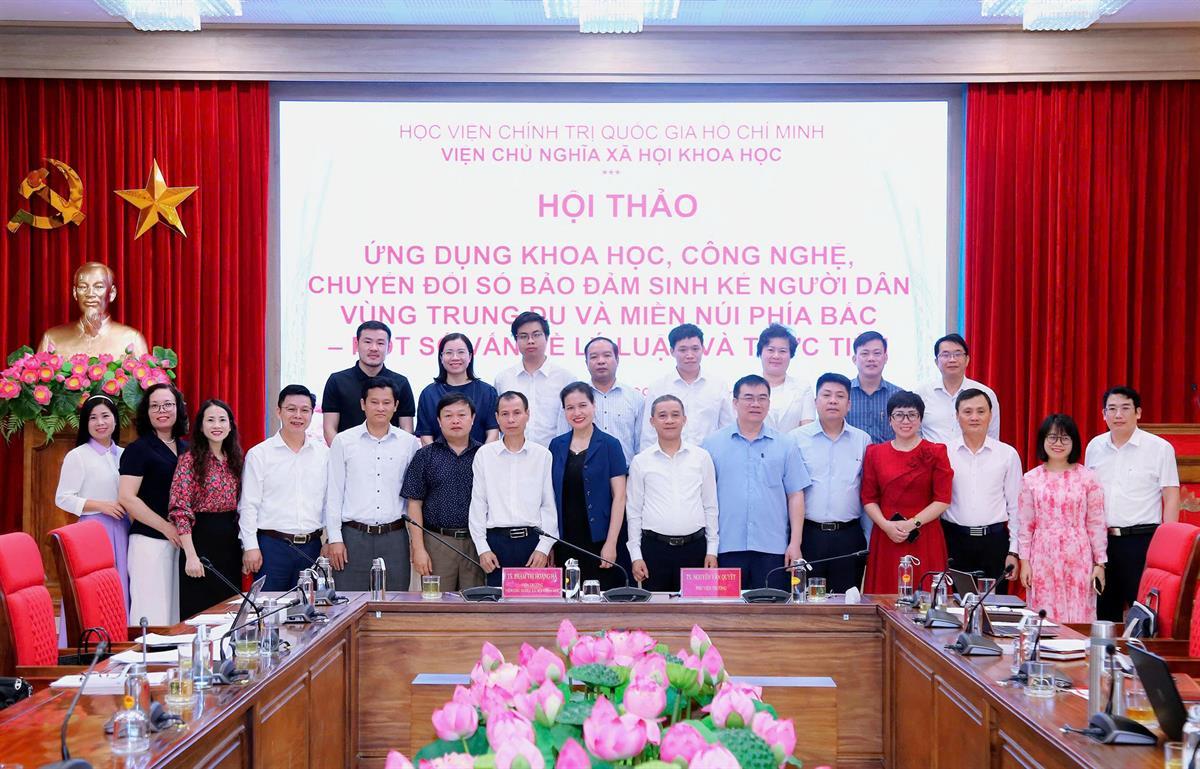 Participants posed for a commemorative photo